

The Silent Crisis in Small Business Cybersecurity — and the AI Tools Changing the Game
Unseen Threats, Unspoken Losses
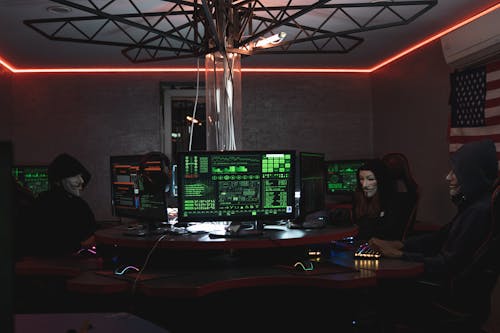
There’s a quiet storm brewing behind the scenes of countless small businesses — one that doesn’t make headlines until it’s too late. It’s the silent crisis of cybersecurity. Every day, small business owners open emails, process payments, or store customer data without realizing just how exposed they are. Cybercriminals thrive on that false sense of safety, knowing that many small companies underestimate their value as targets. The result? A growing wave of data breaches, ransomware attacks, and financial losses that strike without warning, often devastating businesses that can’t afford to recover. For any small business handling customer data, AI Powered Cybersecurity is no longer optional—it’s essential.
The truth is, hackers see small businesses as easy prey. Unlike major corporations with dedicated security teams, smaller organizations often run on limited resources, juggling growth with day-to-day operations. A single phishing email or weak password can compromise an entire network. Yet many owners still assume cyberattacks are problems reserved for the big players. That misplaced confidence is exactly what attackers count on. And as digital transactions, remote work, and cloud storage become the norm, the risks only multiply.

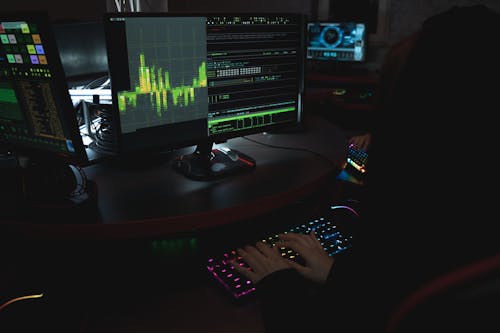
But just as the threat has evolved, so has the technology fighting back. Artificial intelligence has quietly become the new frontline of cybersecurity — spotting what human eyes might miss. AI tools don’t wait for attacks to happen; they monitor systems continuously, learning from patterns and adapting to new forms of intrusion in real time. Instead of relying on traditional antivirus software or manual oversight, these smart systems use behavioral analysis to flag unusual activity, isolate threats instantly, and even predict potential attacks before they unfold.
For small businesses, this means power and protection once reserved for enterprises with million-dollar budgets. Cloud-based AI cybersecurity platforms bring sophisticated defense within reach, automatically updating and improving without complicated setup. They detect malware hidden in emails, block unauthorized logins, and respond to suspicious behavior faster than any human could. It’s defense that works silently, efficiently, and tirelessly — a perfect match for the fast-paced, resource-limited environment of small business life.
The silent crisis in small business cybersecurity isn’t going away, but the game is finally changing. With AI on their side, small teams no longer have to fight blind or hope luck is on their side. They can take back control, protect their data, and face digital threats with confidence. Because when the invisible becomes visible, awareness becomes action — and that’s when real security begins.
…







































 The philosophical tradition of the concept of the virtual points to a referent that is not physical and becomes an abstract entity independent of any concrete realization, but without denying the scope of the real; hence virtuality as reality, as simulated existence and not opposed to the physical or real.
 These reflections on the virtual do not deny the philosophy of technoscience, due to the indeterminacy that springs from Heisenberg’s theory, more in these times than new events have begun to take shape with the quantum computer (beyond the digital) in the cyber world of the virtual. The approach from the thought and science of complexity, articulates scientific knowledge in all areas, in systems and networks.